

How to Ensure Business Continuity During Power Failures in the UK: Essential Strategies for Modern Enterprises
Power cuts can strike without warning, leaving businesses unable to operate and losing money by the minute. Recent blackouts across Europe show that grid failures happen even in developed countries. UK businesses face growing risks from extreme weather, aging infrastructure, and increased demand on the power grid.

The key to protecting your business is having a solid plan that includes backup power systems, clear response procedures, and regular testing to ensure everything works when you need it most. Without proper preparation, even a short outage can halt operations, damage equipment, and put staff and customers at risk.
This guide walks you through practical steps to keep your business running during power failures. You’ll learn how to assess your risks, choose the right backup solutions, and build a response plan that protects your operations, revenue, and reputation.
Understanding the Impact of Power Outages on UK Businesses

Power outages can disrupt your operations within seconds and cause significant financial losses. UK businesses face growing risks from aging infrastructure, extreme weather, and infrastructure failures that threaten daily operations.
Consequences of Power Failures for Operations and Safety
When you lose electricity, your business operations can grind to a halt. Your computers shut down, production lines stop, and communication systems fail. This means you cannot serve customers, process payments, or access critical data.
The financial impact adds up quickly. You lose revenue for every hour your business stays closed. Your products might spoil if you rely on refrigeration. You may need to pay staff who cannot work during the outage.
Safety risks increase during power failures:
- Emergency lighting systems may fail
- Security alarms stop working
- Fire detection systems lose power
- Ventilation systems shut down in enclosed spaces
Your data faces serious risks too. Sudden power loss can corrupt files and damage servers. You might lose important customer information or financial records if you lack proper backup systems.
Common Causes of Power Outages in the UK
Winter weather and storms cause many power cuts across the UK. High winds knock down power lines whilst heavy snow and ice damage electrical equipment. Lightning strikes can also trigger sudden outages.
Accidental damage accounts for a significant portion of power loss. Road works crews sometimes cut through underground cables. Vehicle accidents can bring down utility poles and transformers.
Planned maintenance requires temporary power shutdowns. Your energy provider schedules these to upgrade equipment and prevent larger failures. You typically receive advance notice for planned outages.
Energy shortages and grid overload pose growing concerns. High demand during peak hours can strain the national infrastructure. This sometimes leads to controlled blackouts to protect the wider grid.
The Risk of Blackouts and Infrastructure Failures
The UK faces increasing risks from aging infrastructure that struggles to meet modern demands. Many power systems were built decades ago and require substantial upgrades. This aging infrastructure makes widespread blackouts more likely.
Recent blackouts in Spain and Portugal demonstrate how quickly power grid failures can spread. Similar events could affect UK businesses without warning. Cyberattacks on energy systems present another emerging threat to grid stability.
Power outages have risen by 64 per cent over the past 15 years in the US. UK businesses face similar trends as climate change brings more extreme weather. Infrastructure failures can leave you without power for hours or even days depending on the severity and location of the problem.
Developing a Business Continuity Strategy for Power Failures

A strong business continuity strategy for power failures requires three key elements: a documented plan that outlines your response procedures, thorough risk assessments to identify vulnerabilities, and clear prioritisation of which systems need power first.
Establishing a Business Continuity Plan
Your business continuity plan (BCP) serves as the foundation for managing power disruptions. This document should detail specific procedures for when power fails, including who to contact, what actions to take immediately, and how to activate backup systems.
The BCP must include emergency contact lists for staff, suppliers, and utility companies. You should also document the locations of circuit breakers, generators, and backup power equipment.
Your plan needs clear roles and responsibilities assigned to team members. Each person should know their exact duties during a power failure, from activating generators to communicating with customers.
Update your BCP at least annually or whenever you make significant changes to your operations. Test the plan regularly through drills to ensure everyone understands their role. Keep copies of the plan in multiple locations, including off-site, so you can access it even if your primary building loses power.
Performing Risk Assessments and Site Surveys
A site survey helps you identify where power vulnerabilities exist in your facility. Walk through your premises and document all electrical systems, backup power sources, and areas that depend on electricity.
Your risk assessment should evaluate how likely power failures are in your area and what impact they would have. Consider factors like your local power grid’s reliability, severe weather patterns, and historical outage data.
A business impact analysis reveals which operations suffer most during power loss. Calculate the financial cost of downtime for different departments and processes. This data helps you justify investments in contingency power solutions.
Document the age and condition of your electrical infrastructure during the site survey. Older wiring and equipment may increase your risk of internal power problems beyond external grid failures.
Critical Systems Identification and Prioritisation
Not all systems need equal power protection during an outage. Your IT servers, security systems, and refrigeration units likely require immediate backup power, whilst office lighting may be less urgent.
Create a prioritised list ranking systems by business impact. Tier 1 systems must stay operational at all costs, Tier 2 systems should resume within hours, and Tier 3 systems can wait until full power returns.
Match your contingency power plan to these priorities. Your generator capacity should cover all Tier 1 systems first, with additional capacity for Tier 2 if possible. This approach ensures you allocate limited backup power resources effectively.
Review your priorities quarterly as business needs change. A system that was low priority may become critical if you expand operations or take on new contracts requiring specific capabilities.
Backup Power Solutions for Business Resilience
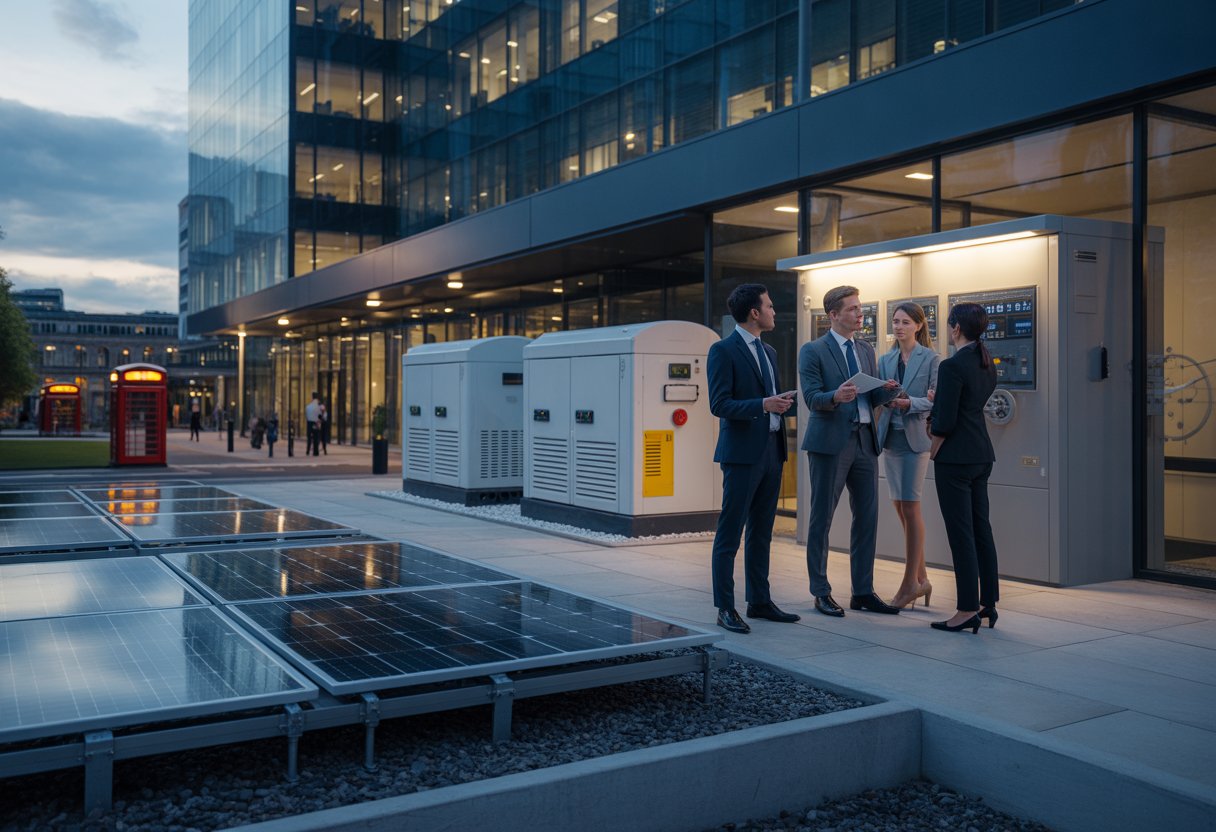
Choosing the right backup power systems protects your operations from unexpected outages and keeps critical equipment running. The main options include generators for extended power needs, UPS systems for instant protection, and battery storage for bridging gaps until larger systems activate.
Selecting Suitable Backup Power Systems
Your business needs determine which backup power solution works best. Start by listing all critical equipment that must stay operational during an outage. This includes servers, refrigeration units, security systems, and communication equipment.
Calculate your total power requirements in kilowatts (kW). Add up the wattage of all essential devices and add 20-30% as a safety margin. Small offices might need 10-20 kW, whilst larger facilities could require 100 kW or more.
Consider how long you need backup power to last. Short outages of minutes to hours suit different systems than day-long failures. Your location’s outage history helps predict typical duration.
Automatic transfer switches connect your backup systems to your electrical panel. They detect power loss within seconds and switch to emergency power without manual intervention. This technology prevents gaps in power supply that could damage sensitive equipment or halt production.
Generators: Types, Sizing, and Fuel Options
Backup generators provide reliable emergency power for extended outages. Diesel generators offer durability and fuel efficiency for commercial use. They work well in cold conditions and deliver consistent power output. Petrol generators cost less initially but consume more fuel and suit smaller applications.
Natural gas generators connect to your mains gas supply, eliminating fuel storage concerns. They start quickly and run cleanly but depend on gas infrastructure remaining intact during emergencies.
Generator hire gives you flexibility if you need temporary capacity or want to test before purchasing. Hire companies deliver, install, and maintain units during your rental period.
Size your backup generator by calculating your peak load requirements. A 20 kW generator supports a small office, whilst warehouses or manufacturing sites need 100-500 kW units. Professional electrical engineers can assess your specific needs and recommend appropriate capacity.
Generators need regular maintenance every 200-400 running hours. Schedule monthly test runs to verify readiness and prevent mechanical issues.
Uninterruptible Power Supplies (UPS) and Battery Storage
UPS systems provide instant backup power the moment mains electricity fails. They protect sensitive electronics from power surges, brownouts, and complete outages. Most uninterruptible power supply units switch to battery power in under 4 milliseconds, preventing data loss or equipment damage.
Three main UPS types serve different needs:
- Standby UPS – Suitable for basic protection of desktop computers and small equipment
- Line-interactive UPS – Handles voltage fluctuations and works for servers and network gear
- Online double-conversion UPS – Offers continuous power conditioning for critical systems like data centres
Battery storage determines how long your UPS runs during outages. Standard systems provide 5-15 minutes of runtime, enough to save work and shut down properly. Extended battery packs increase runtime to several hours.
Size your UPS by calculating the volt-ampere (VA) rating needed. Add up all connected equipment wattage and multiply by 1.4 to account for power factor. A 1000 VA UPS handles roughly 600-700 watts of equipment.
Replace UPS batteries every 3-5 years to maintain reliable performance. Most units include monitoring software that alerts you when battery health declines.
Contingency Planning and Power Outage Response
A robust contingency power plan defines specific actions your business will take when power fails, whilst proper training and clear communication protocols ensure your team can execute these actions effectively during actual outages.
Contingency Power Plans and Immediate Actions
Your contingency power plan must document which systems receive priority during a power failure. Start by identifying critical equipment such as servers, refrigeration units, security systems, and essential lighting. List these in order of importance with specific load requirements measured in kilowatts.
Create a step-by-step activation procedure for your backup power systems. This should include how to start generators, which circuits to power first, and the expected timeframe for each action. Document the physical location of all emergency equipment, including generators, fuel supplies, and manual override switches.
Assign specific roles to named individuals for immediate response actions. One person should assess the outage scope, another should activate backup systems, and a third should monitor critical equipment. Include alternative personnel for each role to cover absences.
Your plan should specify fuel management procedures, including current supply levels, consumption rates, and supplier contact details for emergency deliveries. Review and update this information quarterly to maintain accuracy.
Staff Training and Emergency Contacts
Train your staff on power outage procedures at least twice per year through practical exercises. Each session should include hands-on practice with generators, manual equipment operation, and decision-making scenarios. Staff need to understand their specific responsibilities rather than just reading about them.
Maintain a dedicated emergency contacts list that includes your electricity supplier’s outage line, backup generator maintenance provider, fuel delivery service, and key internal personnel. Store this list in multiple accessible locations, including printed copies in emergency kits and digital versions on mobile devices.
Test your emergency contacts quarterly to verify the numbers remain current. Ensure at least three staff members can access this information at any time, including outside normal business hours.
Communication Protocols During Outages
Establish clear communication chains for notifying staff, customers, and suppliers about power disruptions. Designate one person as the primary communicator to avoid conflicting messages. Your protocol should specify when to send initial notifications, updates every hour during extended outages, and final restoration confirmations.
Use multiple communication channels since internet-based systems may fail during power outages. This includes mobile phones, landlines, text messages, and battery-powered radios. Prepare template messages in advance for faster deployment during actual emergencies.
Your customers need to know how the outage affects service delivery, estimated restoration times, and alternative contact methods. Keep messages factual and avoid speculation about causes or duration until you have confirmed information.
Maintenance, Testing, and Ongoing Preparedness
Regular maintenance and testing ensures your backup power systems work when you need them most. Outdated equipment and untested plans create vulnerabilities that only become apparent during actual power failures.
Establishing Maintenance Schedules for Backup Systems
Your backup power systems require consistent maintenance to function properly during emergencies. UPS batteries typically need replacement every 3-5 years, whilst diesel generators require monthly inspections and regular oil changes.
Create a detailed maintenance schedule that includes weekly visual inspections, monthly operational checks, and annual professional servicing. Document every maintenance activity in a logbook with dates, findings, and repairs completed.
Check battery terminals for corrosion monthly. Test automatic transfer switches quarterly to verify they activate within the required timeframe. Replace air filters in generators every 200-400 hours of operation or as specified by the manufacturer.
Keep spare parts on-site for critical components. This includes spare batteries, fuses, fuel filters, and belts. Stock items that suppliers cannot deliver quickly during widespread power outages.
Your maintenance schedule should align with manufacturer recommendations and industry standards. Assign specific staff members responsibility for each maintenance task and set up automated reminders to prevent missed inspections.
Routine Drills and Power Failure Simulations
Testing your disaster recovery plans reveals gaps before real emergencies occur. Schedule unannounced power failure drills at least twice yearly to assess how quickly your staff responds and whether backup systems activate properly.
During simulations, document how long systems take to switch to backup power. Record which equipment fails to receive power and identify communication breakdowns amongst staff. Time how long critical operations can continue on backup power with current fuel or battery reserves.
Key elements to test during drills:
- Automatic transfer switch activation time
- Staff notification procedures
- Data centre failover processes
- Customer communication protocols
- Generator fuel consumption rates
Review drill results within 48 hours whilst observations remain fresh. Update your business continuity plan based on identified weaknesses.
Upgrading Ageing Infrastructure and System Components
Aging infrastructure increases the risk of failure during power outages. Equipment installed over a decade ago lacks the efficiency and reliability of modern systems.
Assess your backup power systems annually for signs they need replacement. Generators showing frequent breakdowns, excessive fuel consumption, or difficulty starting require immediate attention. UPS systems that no longer hold adequate charge cannot protect your operations.
Budget for phased upgrades rather than waiting for complete system failure. Replace the oldest or most critical components first. Modern generators offer better fuel efficiency and remote monitoring capabilities that older models lack.
Consider upgrading to lithium-ion UPS batteries if you currently use lead-acid batteries. They last longer, charge faster, and require less maintenance. Newer automatic transfer switches provide faster switching times and better surge protection than models from previous decades.
Ensuring Compliance, Safety, and Stakeholder Confidence
Power failures create legal obligations and communication challenges that can affect your organisation’s reputation and operations. Meeting health and safety requirements, protecting critical data, and maintaining clear external communication helps preserve stakeholder trust during outages.
Health and Safety During Power Failures
You must comply with the Health and Safety at Work Act 1974, which requires you to protect employees, visitors, and contractors during power outages. Emergency lighting systems are legally required in most commercial premises to illuminate escape routes, stairwells, and exits for at least three hours.
Your responsibilities include:
- Installing and testing emergency lighting monthly
- Maintaining clear evacuation routes even in darkness
- Providing torches or battery-powered lighting in essential work areas
- Training staff on power failure procedures
You should create a safety checklist that covers immediate actions when power fails. This includes accounting for all personnel, securing hazardous equipment, and checking that vulnerable individuals receive assistance. Keep a list of emergency contacts accessible without requiring computer systems, including building management, utility providers, and local emergency services.
Document all incidents and your response actions to demonstrate compliance if questioned by regulators. The Regulatory Reform (Fire Safety) Order 2005 requires you to assess and reduce fire risks, which increase during power failures when detection systems may fail.
Data Security and Disaster Recovery Considerations
You must protect customer and business data during power outages to comply with UK GDPR requirements. Unexpected power loss can corrupt databases, damage servers, and expose sensitive information if security systems fail.
Your disaster recovery plan should include:
- Uninterruptible power supplies (UPS) for servers and critical systems
- Automated backup systems that run independently of mains power
- Secure access controls that remain active during outages
- Data centre redundancy across multiple locations
Test your backup systems regularly to verify they work when needed. You should maintain offline copies of essential data that remain accessible without power. Cloud-based systems often provide better resilience than on-site servers, but you need backup internet connectivity to access them.
Your disaster recovery procedures must specify recovery time objectives (RTOs) for different systems. Customer-facing services typically require faster restoration than internal administrative functions. Document which data requires immediate protection and which can tolerate brief interruptions.
External Communication and Reputational Protection
You need to inform customers, suppliers, and partners promptly when power failures affect your services. Transparent communication prevents speculation and maintains confidence in your organisation’s competence.
Prepare communication templates before outages occur that explain:
- What services are affected
- Expected duration of disruption
- Alternative contact methods
- Compensation or remediation offered
Your communications team requires battery-powered devices and mobile data to send updates via email, social media, and your website. Designate specific spokespersons authorised to speak publicly about incidents. Inconsistent messages damage credibility more than brief service interruptions.
You should update your website status page immediately and send proactive notifications rather than waiting for complaints. Post-incident, publish a transparent summary of what happened, how you responded, and improvements you’ll implement. This demonstrates accountability and strengthens stakeholder confidence in your business continuity capabilities.
Frequently Asked Questions
Power failures require specific preparations, from selecting appropriate backup systems to safeguarding data and training your team to respond quickly when electricity supplies are interrupted.
What are the best practices for maintaining operations during unexpected electricity outages?
You should identify which equipment and systems are essential to your business operations before an outage occurs. This means creating a list of critical functions that must continue running, such as payment systems, refrigeration units, or security equipment.
Your emergency response plan needs to include clear communication methods that work without electricity. Keep charged mobile phones, battery-powered radios, and written contact lists readily available. You should also designate specific staff members who will coordinate the response and make decisions during the outage.
Regular testing of your power outage procedures ensures everyone knows their role. Schedule practice drills at least twice per year and update your plan based on what you learn from each test.
Which backup power solutions are most suitable for UK businesses?
Backup generators provide reliable long-term power during extended blackouts. Diesel generators work well for larger operations, whilst natural gas or propane models suit smaller businesses with different fuel availability.
Uninterruptible Power Supply (UPS) systems offer immediate power protection for computers and sensitive electronics. These battery-based units activate instantly when mains power fails, giving you time to save work and shut down systems properly. They typically provide 15 minutes to several hours of power depending on the model.
Your choice depends on what equipment you need to protect and how long outages typically last in your area. Generators handle whole-building power needs during extended failures, whilst UPS systems protect specific devices from brief interruptions and power quality issues.
How can companies conduct effective business continuity planning for electrical disruptions?
Start by assessing which business functions cannot stop during a power cut. Document every piece of equipment, software system, and process that these functions depend upon. This assessment shows you exactly what needs backup power or alternative procedures.
Your plan must include detailed steps for responding to different outage scenarios. Write separate procedures for short disruptions under one hour versus extended blackouts lasting several hours or days. Include specific actions for protecting inventory, securing premises, and maintaining customer service.
You need to review and update your business continuity plan regularly. Set a schedule to check the plan every six months and revise it whenever you add new equipment, change locations, or learn lessons from actual outages.
What steps should be taken to protect critical business data during power cuts?
Install UPS systems on all servers, computers, and network equipment that store or process important data. These devices prevent sudden shutdowns that can corrupt files and damage hardware.
Enable automatic backup systems that save your data to multiple locations throughout the day. Cloud-based backup services work well because they store information off-site, protecting it even if your building loses power for extended periods. Keep at least one recent backup copy stored physically away from your main premises.
Configure your computers and servers to save work automatically every few minutes. Train staff to save their work frequently and maintain the habit of backing up important files at the end of each day.
How should businesses communicate with stakeholders during a power failure?
Keep a current contact list that includes mobile numbers for employees, suppliers, key customers, and emergency services. Store this list in multiple formats, including printed copies that remain accessible without electricity.
Send updates to stakeholders as soon as you know the scope and expected duration of the outage. Use mobile phones, text messages, and social media to reach people quickly. Be honest about what you know and don’t know about when normal operations will resume.
Designate one person to handle external communications during the outage. This prevents confusion from mixed messages and ensures stakeholders receive consistent information. Update your voicemail and website with current information about your operating status.
Can you recommend any training or resources to help staff respond to power-related incidents effectively?
The UK government provides free business continuity planning guides that include power outage preparation. These resources offer templates and checklists you can adapt to your specific business needs.
Conduct hands-on training sessions where staff practise responding to simulated power failures. Walk through your premises during these drills to identify safety hazards in darkness and test whether backup lighting works properly. Each session should cover how to secure equipment, assist customers safely, and contact emergency coordinators.
Your local fire and rescue service often provides business safety training that includes emergency response procedures. Professional organisations like the Business Continuity Institute offer workshops and certification programmes for staff who manage continuity planning. Online courses allow your team to learn power outage response procedures at their own pace.
Need help?
Should you wish to discuss a particular application or requirement
Then please contact us free on 03300271309 or email us at sales@upscentre.co.uk

Tony Whittam
Specialist in digital marketing for more than 18 years, I am the co-founder and CEO of T & T Web Design. Affordable Search Engine Optimisation (SEO), PPC Management and Reputation Management.


