


High Discharge Lead Acid vs Lithium UPS Batteries: Which One Actually Protects Your Equipment?
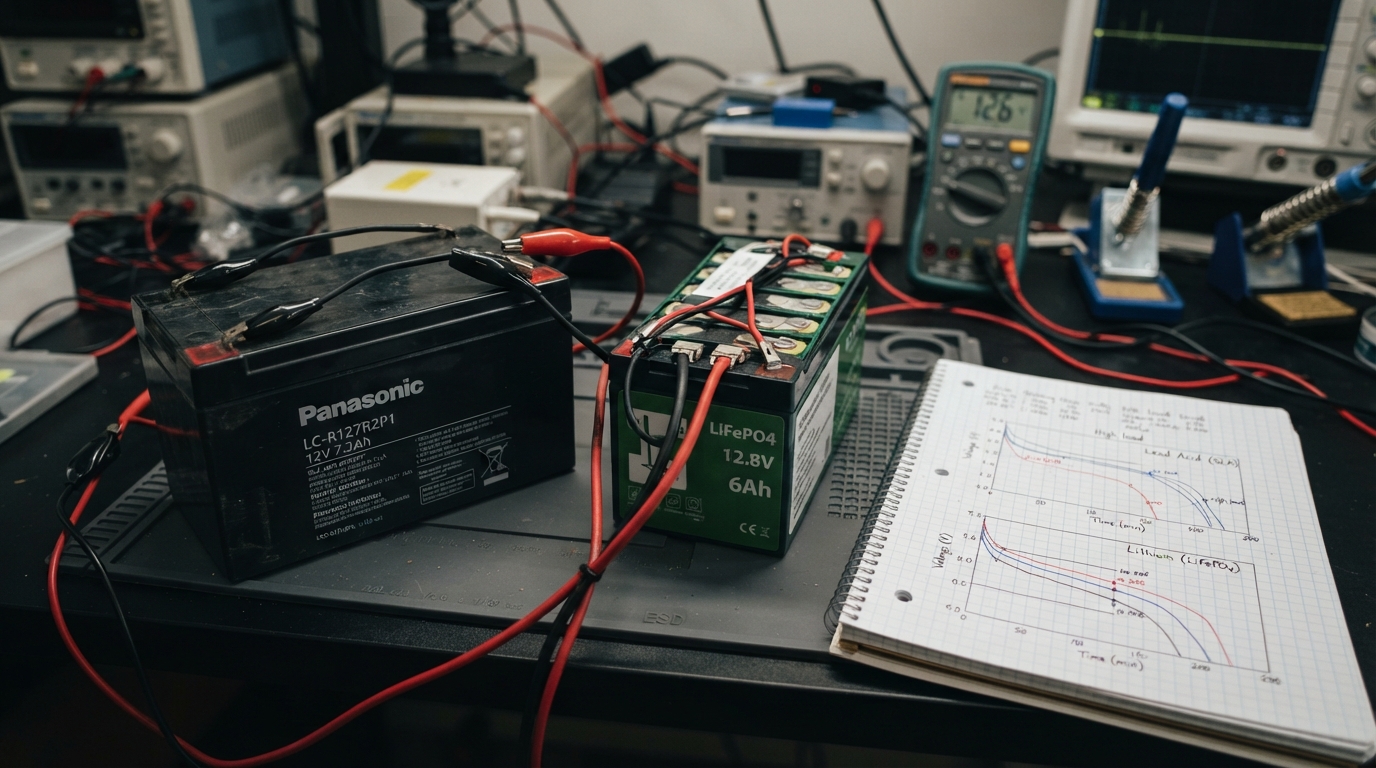
Power cuts don’t announce themselves before they happen, and when they hit, the battery inside your UPS is the only thing standing between you and a hard shutdown. Here’s a number worth sitting with when comparing high discharge lead acid vs lithium UPS batteries: LiFePO4 lithium cells deliver somewhere between 3,000 and 5,000 discharge cycles, while a typical VRLA lead-acid battery taps out at just 200 to 500 cycles before it needs replacing.
Key Takeaways
- Lifecycle gap is huge: Lithium batteries last roughly 6-10 times longer in cycle count than sealed lead-acid.
- Depth of discharge matters: Lithium can be run down to near-empty, while lead-acid should stay above 50% to avoid damage.
- Footprint shrinks: Lithium UPS units pack the same runtime into a much smaller, lighter enclosure.
- Heat is the enemy of lead-acid: Every 10°C above room temperature can cut its service life in half.
- Upfront cost still favours lead-acid: Lithium systems typically cost more per kWh to buy outright.
- Data centres are switching fast: Lithium-ion now dominates large-scale UPS deployments by market share.
- Refurbished lead-acid units remain a smart budget option for offices that don’t need the lithium premium, and you can browse the full UPS range to compare both technologies side by side.
What “High Discharge” Actually Means for a UPS Battery
A UPS isn’t just sitting there doing nothing until the grid fails. The moment mains power drops, the battery has to release a large burst of current almost instantly to keep servers, tills, or medical equipment running without so much as a flicker. That burst is the “high discharge” part of the equation. Both lead-acid and lithium chemistries can do it, but they handle the stress very differently once you look past the first few outages. This is really the core of the high discharge lead acid vs lithium UPS batteries debate: it’s not about which battery can deliver power in an emergency, because both can. It’s about which one keeps delivering it reliably, outage after outage, year after year.
Discharge Cycles and Depth of Discharge
Lead-acid batteries don’t like being drained. Push a sealed lead-acid battery below 50% capacity too often and you’ll shorten its working life significantly. Lithium batteries don’t have that problem. They can be discharged to 85% or more of total capacity without the same degradation, which means you get more usable runtime out of a smaller battery. For a business running mission-critical equipment through frequent brownouts, that difference adds up fast. A lead-acid UPS might survive a handful of deep-discharge events before its capacity starts sliding, while a lithium equivalent will still be performing at close to full strength.
Energy Density and Footprint: The Space Argument
Lithium-ion batteries store roughly three to five times more energy per kilogram than lead-acid, with energy density figures in the 150-200 Wh/kg range compared to 30-50 Wh/kg for lead-acid. That’s why lithium UPS units can be up to 70% smaller than a lead-acid system rated for the same output. If you’re trying to fit backup power under a desk, into a comms cupboard, or onto a crowded server rack, that space saving isn’t a nice-to-have. It’s often the deciding factor. Products like the Tecnoware Evo DSP Plus 3600VA Rack/Tower UPS show how far manufacturers have pushed the online double-conversion format, but even a well-engineered lead-acid unit still needs more physical room than its lithium counterpart to deliver the same protection.
Heat Tolerance and Longevity in UK Conditions
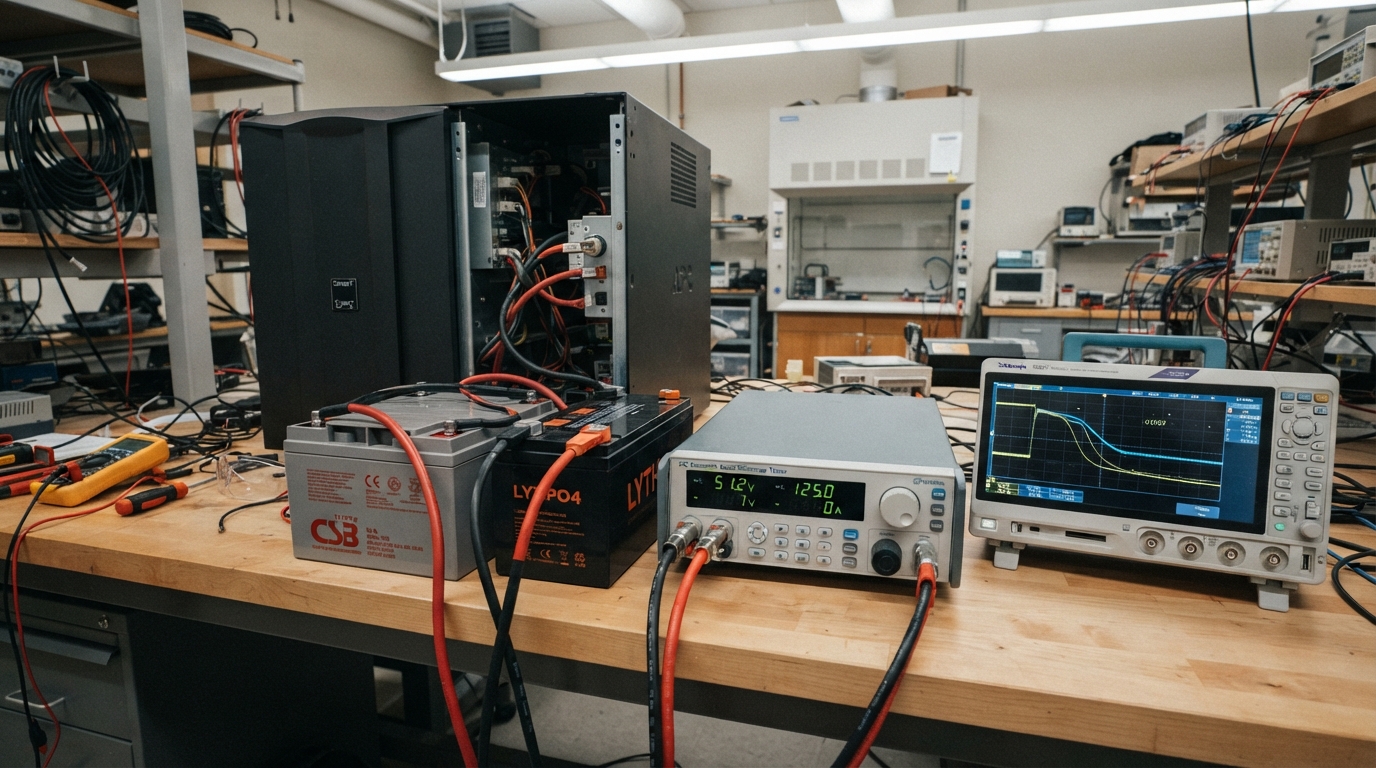
UK server rooms and home offices aren’t always climate-controlled to the letter. Comms cupboards get warm, home offices sit under summer sun, and that heat quietly eats away at lead-acid battery life. Lithium chemistry is far more forgiving across a wider temperature range, which matters when your UPS is sitting somewhere less than perfectly cool.
That’s a real risk for any business relying on ageing infrastructure or a home office that doubles as a spare room. Voltage fluctuations and heat stress are quietly degrading equipment that most people assume is fine simply because the lights haven’t gone out yet.
Runtime, Recharge Speed, and Everyday Efficiency
Lithium batteries recharge up to four times faster than lead-acid, which shrinks the window of vulnerability between one outage and the next. If your area sees repeated short cuts rather than one long one, that recovery speed matters more than the headline runtime figure. Efficiency stacks up in lithium’s favour too. Lithium-ion typically runs at 95% efficiency or higher during charge and discharge cycles, while lead-acid sits closer to 80-85%. Over months of constant charging and topping up, that gap translates into a lower electricity bill and less wasted energy as heat.
Upfront Cost vs Total Cost of Ownership
Here’s where the high discharge lead acid vs lithium UPS batteries decision gets harder for a lot of buyers. Lithium-ion systems typically cost two to three times more upfront per kWh than a standard lead-acid setup. That’s a genuine barrier, especially for smaller businesses watching every line item. But total cost of ownership tells a different story. Because lithium batteries last years longer and don’t need replacing as often, the higher purchase price often evens out or reverses over the system’s lifetime. A UPS like the APC Smart-UPS 1000VA (670W), priced at £182.99, is a solid, affordable lead-acid option for a single workstation. But if you’re protecting mission-critical equipment that can’t tolerate downtime, the maths shifts toward lithium fairly quickly once you factor in fewer replacements and less engineer callout time.
Best High Discharge Lead Acid vs Lithium UPS Batteries for Small Offices and Home Workers
Not every setup needs enterprise-grade lithium hardware. A compact battery backup system sitting quietly under your desk is often the difference between losing minutes of work and losing hours of it, and for that job, lead-acid still holds its own. The Tecnoware Era Plus 1600VA UPS, priced at £125.00, is a good line-interactive option with AVR built in, meaning it corrects voltage sags and spikes before they ever reach your PC or router. For a small office network with a few more devices, the Riello Sentinel Pro 1000VA UPS gives you a compact footprint with an LCD display for at-a-glance status checks. Neither of these needs the higher cost of lithium chemistry to do its job well.
Best High Discharge Lead Acid vs Lithium UPS Batteries for Data Centres and Enterprise Networks
Scale changes everything. When you’re protecting racks of servers rather than a single desktop, the calculation around high discharge lead acid vs lithium UPS batteries tips firmly toward lithium, and the market data backs that up. Lithium-ion now accounts for 60.7% of the battery type used in large data centre UPS deployments, overtaking lead-acid as the default choice for high-density environments.
That weight reduction eases floor-load pressure in server rooms and lets facilities managers fit more backup capacity into the same rack space. The Eaton 5PX Gen2 2U UPS, priced at £1920.00, is built for exactly this kind of enterprise deployment, and Eaton offers lithium-ready configurations for businesses ready to make the switch. The APC Smart-UPS On-Line SRT 1500VA, at £1122.00, is a strong double-conversion option for businesses staying on lead-acid for now while keeping an eye on lithium as budgets allow.
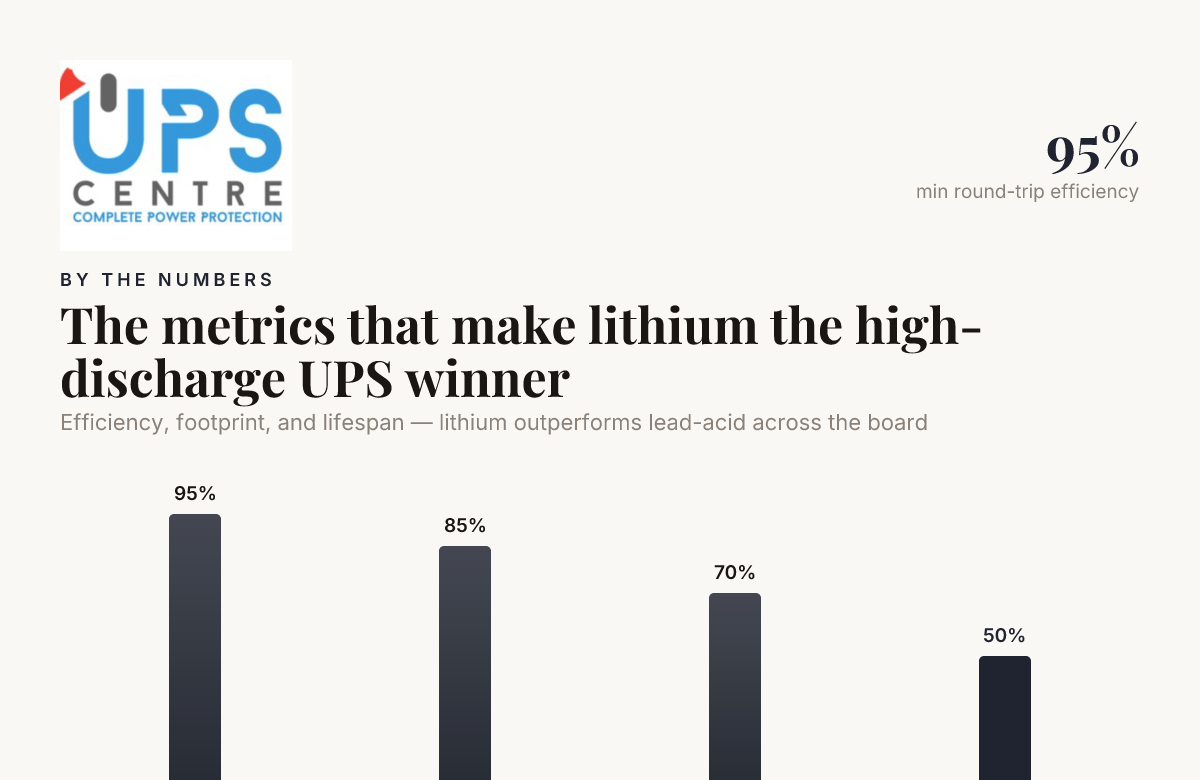 Efficiency, footprint, and lifespan: lithium outperforms lead-acid across the board
Why Lead-Acid Still Holds Nearly 40% of the Market
Despite everything lithium does better, valve-regulated lead-acid batteries still held close to 39.41% of the UPS battery market by share. That’s not a small number, and it tells you lead-acid isn’t going away anytime soon. Businesses with predictable, low-frequency outages, tight budgets, or equipment that isn’t truly mission-critical often find lead-acid does the job perfectly well. The Tecnoware Exa Plus 3000VA UPS, priced at £510.00, is a good example of solid mid-range lead-acid protection that doesn’t demand a lithium price tag. It safeguards against surges, brownouts, and voltage drops that quietly degrade your equipment, and for many offices, that’s exactly the level of protection they need.
Refurbished Lead-Acid UPS Units: A Reassured Budget Alternative
If lithium’s price tag is putting you off but you still want dependable backup power, a refurbished lead-acid UPS is worth a serious look. A refurbished UPS means it has been carefully checked over by trained engineers who examine every part of the unit to ensure it’s functioning properly before it goes back out. That process gives you reassurance without the full cost of a brand-new system, and it’s a route we regularly recommend to businesses that need reliable backup power but don’t have an enterprise budget. You can explore the broader UPS systems available in our store to see current lead-acid and lithium options side by side.
Lithium-Ion UPS Systems: The Direction the Industry Is Heading
Lithium-ion UPS systems are transforming how businesses protect critical equipment and data, and the shift isn’t slowing down. Longer lifespans, reduced maintenance, and a smaller footprint make lithium the obvious choice for anyone building new infrastructure from scratch. If you want to understand exactly how this shift is playing out across data centres, healthcare, and financial services, our full breakdown of how lithium-ion UPS systems are changing backup power covers the technical detail in depth.
Lost data, damaged equipment, and expensive downtime are real risks that businesses face every day. Choosing the right battery chemistry now is cheaper than replacing failed hardware later.
Which Side of High Discharge Lead Acid vs Lithium UPS Batteries Wins?
There’s no single winner in the high discharge lead acid vs lithium UPS batteries debate, because the right answer depends entirely on what you’re protecting. For mission-critical equipment, frequent outages, or tight rack space, lithium’s longer lifecycle, faster recharge, and smaller footprint make it worth the higher upfront cost. For smaller offices, home workers, or predictable low-frequency power cuts, a well-built lead-acid UPS (new or carefully refurbished) still does the job reliably and affordably. Every flicker, brownout, and dip in power poses a risk to your hardware, so whichever chemistry you choose, the goal is the same: a safety net that’s actually ready when the grid fails.
Frequently Asked Questions
Is lithium better than lead-acid for a high discharge UPS?
For high discharge situations, lithium generally performs better because it handles deep discharge cycles without the same wear that damages lead-acid batteries. It also recharges faster, which matters if outages happen back to back.
How many discharge cycles does a lithium UPS battery last compared to lead-acid?
Lithium UPS batteries typically last 3,000 to 5,000 discharge cycles, while sealed lead-acid batteries usually manage only 200 to 500 cycles. That’s the single biggest factor separating high discharge lead acid vs lithium UPS batteries over the long term.
Why are lithium UPS batteries more expensive than lead-acid?
Lithium-ion systems cost roughly two to three times more per kWh upfront than lead-acid because of the raw materials and battery management technology involved. That gap often closes over time thanks to lithium’s longer lifespan and lower maintenance needs.
Can I replace a lead-acid UPS battery with lithium?
In some cases yes, but it depends on the UPS unit’s design and whether it supports lithium-compatible charging profiles. It’s best to check with the manufacturer or a UPS specialist before swapping chemistries in an existing system.
Which UPS battery type is better for a home office?
For most home offices, a lead-acid line-interactive UPS offers enough protection at a lower price point, since home setups rarely face the frequent deep-discharge cycles that justify lithium’s premium. If you’re running mission-critical equipment from home, lithium’s longer lifespan may still be worth the extra cost.
Do lithium UPS batteries perform better in hot environments than lead-acid?
Yes. Lead-acid batteries lose roughly half their service life for every 10°C rise above their rated temperature, while lithium chemistry tolerates a much wider temperature range without the same degradation.
Is switching to a lithium UPS worth it for a small business?
It depends on how critical your equipment is and how often you experience power cuts. If downtime costs you real money or client trust, the longer lifespan and faster recovery of lithium usually justifies the higher upfront price over a standard lead-acid setup.
Need help?
Should you wish to discuss a particular application or requirement
Then please contact us free on 03300271309 or email us at sales@upscentre.co.uk

Tony Whittam
Specialist in digital marketing for more than 18 years, I am the co-founder and CEO of T & T Web Design. Affordable Search Engine Optimisation (SEO), PPC Management and Reputation Management.


