


UPS vs Generator: Which Backup Power Option Is Best for You? A Comprehensive Comparison for Home and Business Use
Power outages can happen at any time, leaving your home or business without electricity for minutes or even days. When the lights go out, having a backup power solution protects your important equipment and keeps your daily life running smoothly. Two main options exist for backup power: uninterruptible power supply (UPS) systems and generators.
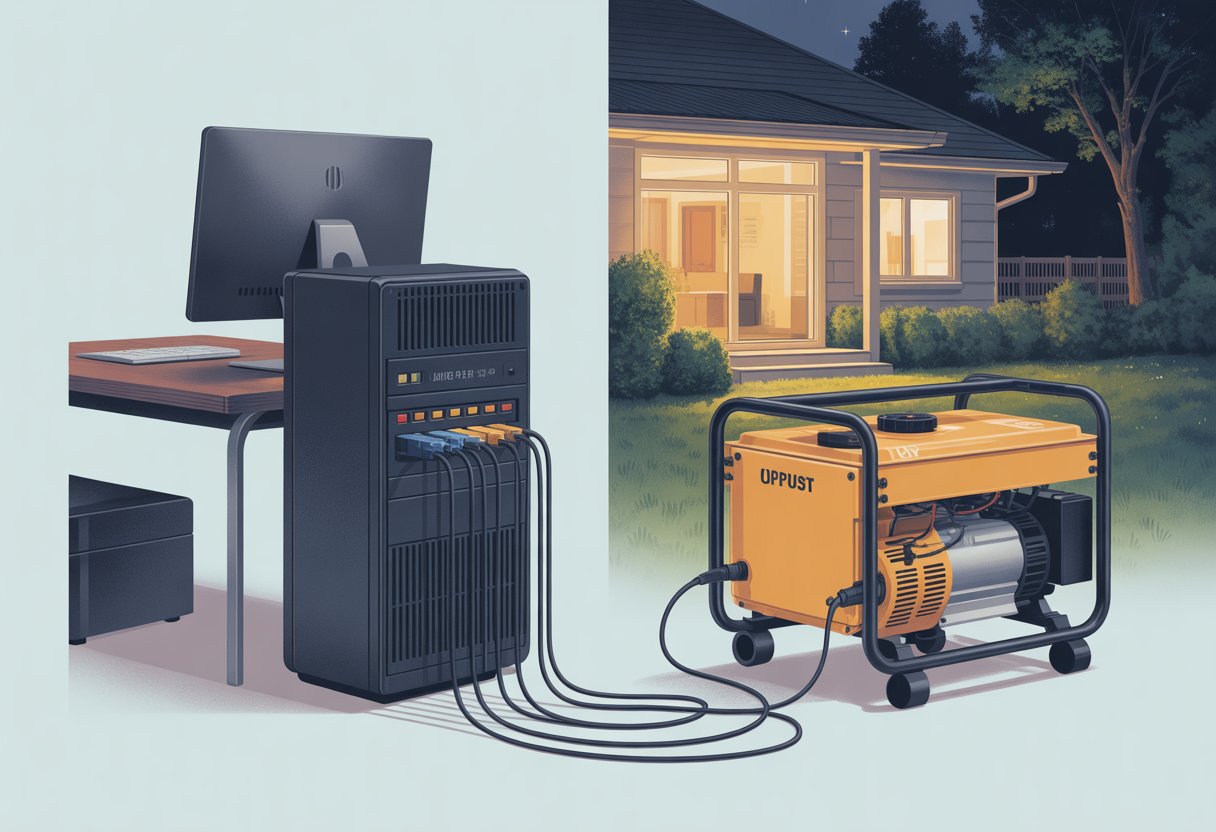
A UPS provides instantaneous power from batteries for short periods, whilst a generator supplies long-term power from fuel but takes time to start up. A UPS switches on immediately when the mains power fails, which makes it ideal for sensitive electronics that cannot handle even a brief power interruption. Generators, on the other hand, can run for hours or days as long as you have fuel, making them better for extended outages.
Understanding how each system works and what they offer will help you choose the right backup power solution for your needs. Some situations may even benefit from using both systems together to provide complete protection against power outages.
Understanding Backup Power Options
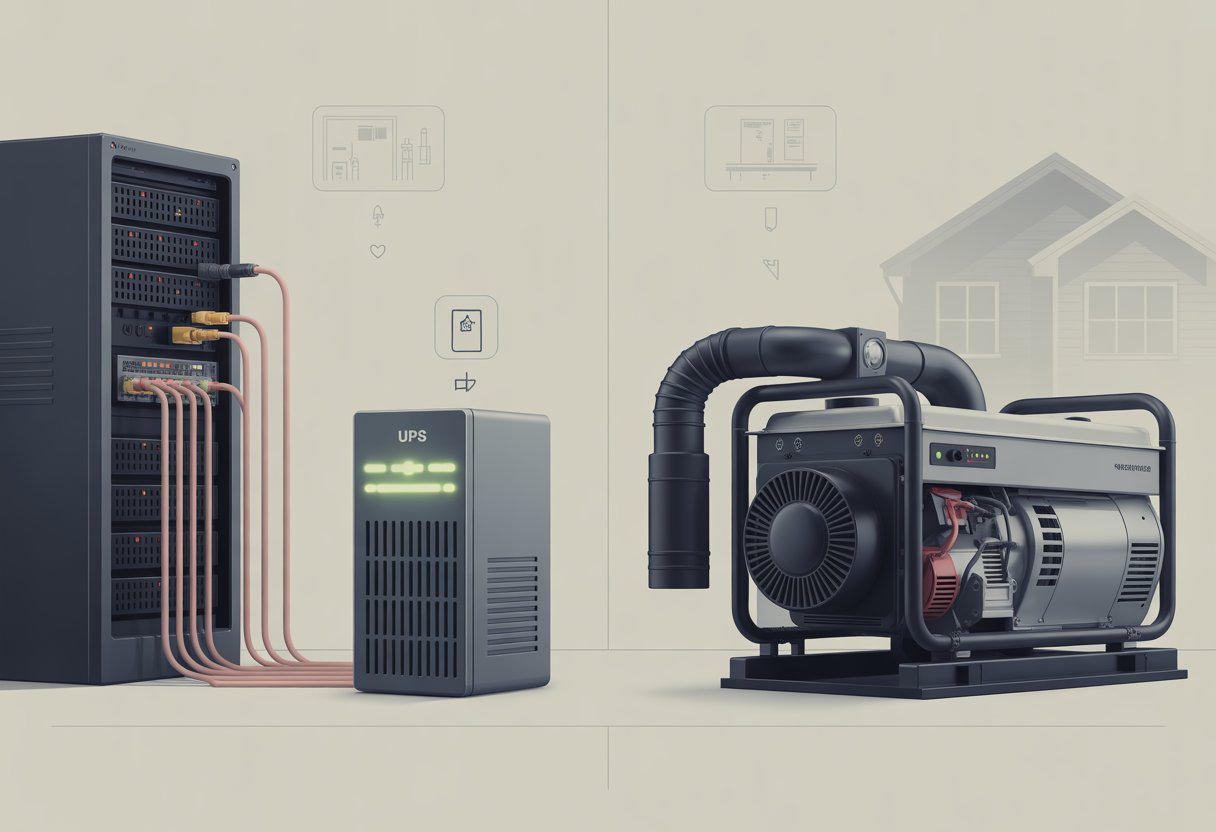
A UPS provides instant power through battery backup when the mains fail, while generators create electricity using an engine and alternator to supply power for extended periods.
What Is a UPS (Uninterruptible Power Supply)?
A UPS is a device that delivers immediate emergency power using an internal battery. When your mains power fails, the UPS system switches to battery power within milliseconds. This instant response prevents any interruption to your equipment.
The uninterruptible power supply protects your devices from power surges and voltage fluctuations. You can think of battery backup as a safety net for sensitive electronics like computers, routers, and medical equipment. The UPS keeps these devices running without any gap in power.
However, a UPS system provides short-term backup power only. Depending on the unit’s size and your power needs, it typically runs for seconds to minutes. This makes it ideal for bridging the gap until either the mains power returns or a backup generator starts up.
What Is a Generator and How Does It Work?
A generator creates electricity by converting mechanical energy into electrical power. The system uses an engine that burns fuel (petrol, diesel, or natural gas) to turn an alternator, which produces electricity.
Generator types include:
- Standby generators – permanently installed units that start automatically during outages
- Portable generators – movable units you manually start and connect when needed
The engine drives the alternator to generate power for your home or business. Unlike a UPS, generators can run for hours or days as long as you provide fuel. This makes backup generators suitable for extended power outages.
Standby generators typically take 10-30 seconds to start and begin supplying power. Portable generators require manual setup and connection, which adds several minutes before they can provide electricity.
Key Differences Between UPS and Generator Systems
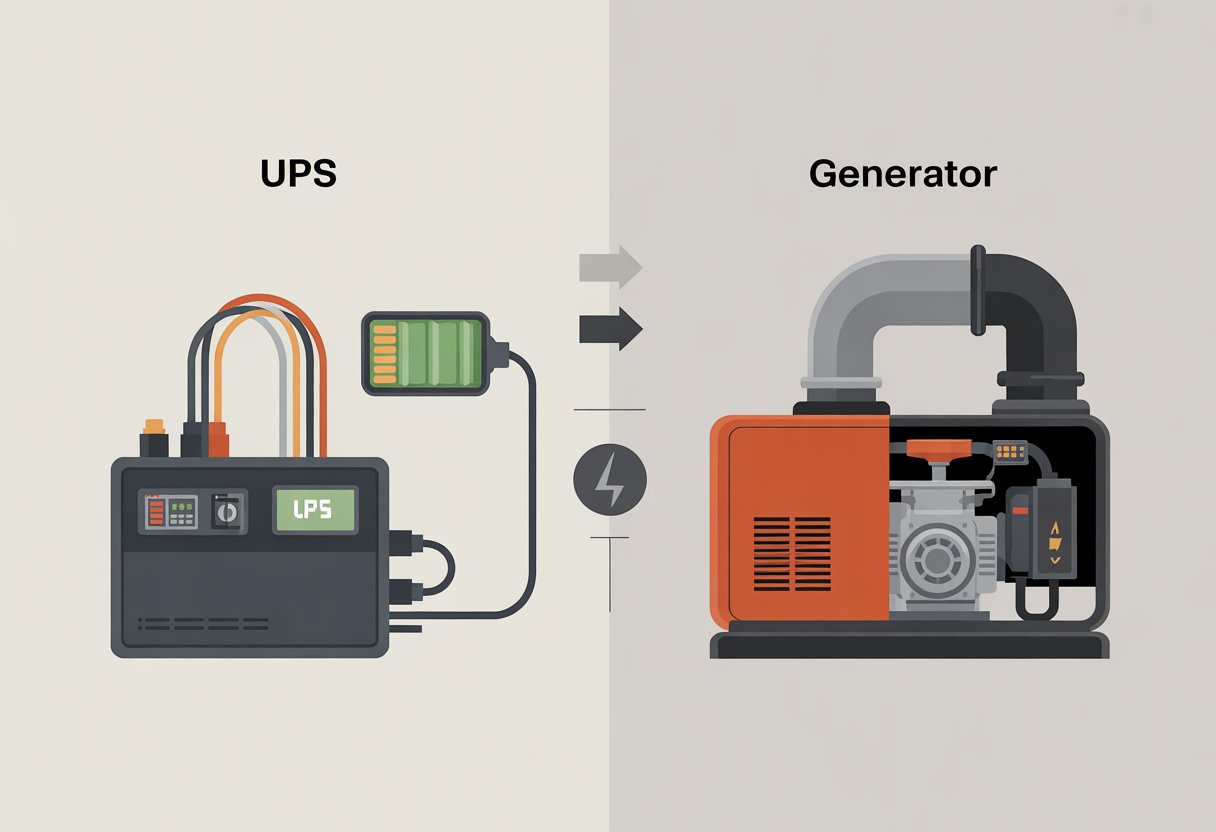
UPS systems and generators differ primarily in how quickly they supply power, how long they can sustain your equipment, and the quality of electricity they deliver during an outage.
Response Time and Power Continuity
A UPS provides instantaneous power the moment your mains supply fails. There’s no delay because the battery is already connected and ready to switch over. An online UPS keeps your devices running on battery power continuously, so you never experience even a microsecond of interruption. A line-interactive UPS switches in milliseconds, which is still fast enough for most electronics.
Generators work differently. They need time to detect the outage, start their engine, and reach stable output. This process typically takes 10 to 30 seconds. During this gap, your equipment has no power unless you pair the generator with a UPS.
For instant power continuity, a UPS is essential. If you run servers, medical equipment, or anything that can’t tolerate a brief shutdown, you need a UPS to bridge the gap until generator backup starts.
Backup Duration and Power Output
UPS systems offer short-term protection, typically lasting 5 to 30 minutes on battery power. Larger systems might run for an hour, but that’s usually the limit. The power output is also limited by battery capacity, making UPS units suitable for computers, networking equipment, and other electronic devices rather than heavy appliances.
Generators provide long-term backup power. They can run for hours or even days, limited only by fuel supply. A properly sized generator can power your entire home or business, including air conditioning, refrigerators, and power-hungry equipment.
For true continuous power supply during extended outages, you need a generator. For brief interruptions or planned shutdowns, a UPS handles the job efficiently.
Power Quality and Voltage Regulation
UPS systems deliver clean power with precise voltage regulation. They filter out voltage fluctuations, electrical noise, and harmonics that can damage sensitive electronics. Most UPS units include surge protection and actively correct power problems even when the mains is working.
Generators produce power that can vary in quality. The voltage and frequency may fluctuate as the load changes, which can harm computers and other delicate equipment. You’ll often need additional equipment to stabilise generator output for sensitive devices.
If power stability matters for your equipment, a UPS protects better than a generator alone. Many businesses use both—the UPS ensures immediate power continuity and clean electricity, whilst the generator provides long-term backup during extended failures.
Benefits and Limitations of UPS and Generators
UPS systems offer instant power protection with minimal maintenance but have limited runtime, whilst backup generators provide extended power supply for longer outages but require fuel storage and produce emissions.
Advantages of Using a UPS
UPS systems switch on instantly when power fails. You get immediate protection for your sensitive electronics without any delay or gap in power continuity. This matters most for computers, servers, and medical equipment that cannot tolerate even a brief interruption.
The systems run silently and produce no emissions. You can place them indoors near your equipment without worrying about noise or fumes. UPS batteries provide clean, stable power that protects against surges and voltage fluctuations.
Key UPS benefits include:
- Instant activation (typically under 10 milliseconds)
- No fuel source required
- Silent operation
- Clean power output
- Compact size for indoor placement
- Protection from power surges and sags
Drawbacks of UPS Systems
Runtime remains the biggest limitation of UPS systems. Most units only provide power for 5 to 30 minutes, depending on the load. You need this time to save work and shut down equipment properly or wait for a generator to start.
UPS batteries degrade over time and require replacement every 3 to 5 years. Battery replacement costs can be substantial, especially for larger systems. UPS maintenance involves testing batteries regularly and keeping the units in temperature-controlled environments.
The initial cost per kilowatt of capacity is higher than generators. Large UPS systems that can power entire facilities become expensive quickly. You also cannot add more runtime simply by refuelling like you can with a generator.
Benefits of Backup Generators
Generators provide extended runtime limited only by your fuel supply. You can run them for hours or even days during prolonged outages. This makes them ideal when you need to power entire buildings or heavy equipment for long periods.
They offer more power capacity at a lower cost per kilowatt than UPS systems. Generators can handle large electrical loads including heating, cooling, and industrial machinery. You can refuel them whilst they run to maintain continuous operation.
Generator advantages include:
- Unlimited runtime with adequate fuel storage
- Higher power capacity for whole-building support
- Lower cost for large-scale backup needs
- Ability to power heavy-duty equipment
- Refuelling during operation
Considerations and Challenges of Generators
Generators take time to start and reach full power output. Most require 10 to 30 seconds to begin supplying electricity after an outage begins. This delay can damage sensitive electronics or cause data loss without a UPS to bridge the gap.
Generator maintenance demands more effort than UPS systems. You need to run them regularly, change oil, replace filters, and inspect components. Fuel storage presents its own challenges, as petrol and diesel degrade over time and require proper containment.
Fuel costs add up during extended outages. You must maintain an adequate fuel supply and plan for refuelling during long-term power failures. Noise and emissions restrict where you can install generators, typically requiring outdoor placement away from windows and air intakes.
Local regulations often govern generator installation, operation hours, and emissions standards. You may need permits and professional installation to comply with building codes.
Choosing the Right Backup Power Solution
Your power requirements and application type determine whether a UPS system, generator, or combination of both provides the most reliable emergency power during outages.
Assessing Your Power Requirements
Calculate the total wattage of all devices you need to keep running during power outages. List every piece of equipment, from computers and servers to refrigerators and heating systems. Add up their individual power draws to determine your minimum backup power capacity.
Consider how long you need backup power to last. A UPS typically provides power for 5 to 30 minutes, which protects sensitive electronics and allows proper shutdown procedures. Backup generators run for hours or days, depending on fuel supply, making them suitable for extended outages.
Your budget affects which backup power solutions you can implement. UPS systems cost less upfront but have limited runtime. Generators require more initial investment plus ongoing fuel and maintenance costs. Think about installation requirements as well—generators need proper ventilation and fuel storage, whilst UPS units simply plug into existing outlets.
Selecting for Home, Business, or Critical Applications
Homes benefit from different solutions based on your priorities. A small UPS protects your computer and internet router during brief interruptions. A whole-home generator keeps essential appliances running during extended outages, particularly important in areas with frequent power disruptions.
Businesses require more sophisticated backup power approaches. Offices with computers and servers need UPS systems to prevent data loss and equipment damage. Manufacturing facilities or shops with heavy machinery typically need generators for sustained operation. Many businesses use both—UPS systems provide instant power whilst generators start up.
Critical applications like hospitals, data centres, and emergency services cannot tolerate any power interruption. These facilities typically install UPS systems for immediate backup power and generators for long-term support. Some also integrate microgrids to create independent power networks that maintain operations regardless of grid stability.
Integrating UPS and Generator Systems for Complete Protection
Using both a UPS system and generator backup together creates a layered defence against power outages. The UPS delivers instantaneous power supply whilst the generator starts up, eliminating any gap in power continuity.
How UPS and Generators Work Together
When mains power fails, your UPS system activates immediately to protect your equipment. This instant response prevents any interruption to sensitive electronics and critical systems.
The generator then starts up within seconds to minutes, depending on your configuration. Once it reaches stable operation, the generator supplies power to your facility whilst simultaneously recharging the UPS batteries. This creates continuous power supply that can last for hours or days.
The UPS acts as a buffer during three critical moments. First, it covers the brief period whilst the generator starts. Second, it conditions the power from the generator to protect against voltage fluctuations. Third, it provides backup if the generator fails to start or experiences issues during operation.
This partnership ensures complete power protection for your operations. Your equipment never experiences downtime or power quality issues during transitions between power sources.
Best Practices for Seamless Power Continuity
You should size your UPS to provide at least 5-15 minutes of runtime. This gives your generator adequate time to start and stabilise before the batteries deplete.
Install automatic transfer switches that coordinate between your UPS, mains power, and generator. These switches manage the transitions smoothly without manual intervention.
Key maintenance requirements include:
- Testing your generator monthly under load
- Inspecting UPS batteries every six months
- Verifying automatic transfer switch operation quarterly
- Keeping generator fuel tanks at least 75% full
Position your generator where exhaust fumes cannot enter your building. Ensure the UPS and generator systems communicate through compatible control interfaces for proper coordination.
Schedule regular load bank testing to verify both systems work together correctly. This identifies potential issues before an actual power outage occurs.
Frequently Asked Questions
UPS systems respond instantly and run on batteries for short periods, while generators take time to start but can run for days on fuel. Setup costs vary widely, with basic UPS units starting lower than generators, though maintenance demands differ significantly between the two options.
What are the primary differences between UPS systems and generators?
UPS systems provide immediate power the moment an outage occurs. They use batteries to deliver electricity without any delay, which protects your sensitive electronics from damage.
Generators require 10 to 30 seconds to start up after the power cuts out. This delay means your devices will briefly lose power before the generator kicks in.
UPS units are designed for short-term backup, typically lasting 15 minutes to a few hours depending on the battery capacity and load. Generators can run for days or even weeks as long as you keep supplying them with fuel like petrol, diesel, or natural gas.
The power quality differs between the two systems. UPS units deliver clean, stable electricity that’s safe for computers and medical equipment. Generators can produce power fluctuations that might harm delicate electronics unless paired with a voltage regulator.
How does the initial setup cost compare between a UPS and a generator?
Basic UPS systems for home use start at around £50 to £200 for smaller units that protect a few devices. Larger whole-home UPS systems can cost £1,000 to £5,000 or more.
Portable generators typically range from £300 to £1,500 depending on their power output. Standby generators that automatically turn on during outages cost £3,000 to £10,000, plus installation fees of £1,000 to £3,000.
Installation affects the total cost differently for each option. Most UPS units simply plug into your wall outlet with no professional installation needed. Generators often require a qualified electrician to connect them to your home’s electrical system and may need a concrete pad or housing structure.
You’ll also need to factor in fuel storage costs for generators. This might include a natural gas line connection or space to store petrol or diesel safely.
What is the typical maintenance required for UPS systems and generators?
UPS systems need their batteries replaced every 3 to 5 years, which costs £50 to £500 depending on the unit size. You should test your UPS monthly by unplugging it to ensure the battery still works properly.
Regular cleaning of dust from the UPS vents helps prevent overheating. Beyond battery replacement and basic cleaning, UPS units require minimal maintenance.
Generators demand more frequent attention to stay operational. You need to run your generator for 15 to 30 minutes every month to keep the engine in good condition.
Oil changes are required every 50 to 100 hours of operation or annually. Air filters need cleaning or replacement several times per year, and spark plugs should be changed annually.
Fuel maintenance is crucial for generators. Petrol can go stale in 3 to 6 months, so you’ll need to use fuel stabilisers or rotate your fuel supply regularly.
Can a UPS provide long-term power backup in the event of an extended outage?
UPS systems are not designed for long-term power backup during extended outages. Most consumer UPS units provide 15 minutes to 2 hours of runtime, depending on how much power your devices draw.
The battery capacity limits how long a UPS can operate. If you’re only running a computer and modem, you might get an hour or more. Running larger appliances drains the battery much faster.
Extended runtime UPS systems exist but become prohibitively expensive for whole-home backup. A UPS powerful enough to run essential appliances for 8 hours could cost £5,000 to £15,000 or more.
Generators are the better choice for outages lasting more than a few hours. They can run continuously as long as you have fuel available, making them suitable for outages lasting days or weeks.
In terms of energy efficiency, how do UPS systems and generators stack up?
UPS systems are more energy efficient during normal operation. They typically consume only 5 to 15 watts whilst on standby, waiting for an outage to occur.
The charging process for UPS batteries achieves 85% to 95% efficiency in modern units. This means very little energy is wasted whilst keeping the batteries ready.
Generators are less efficient at converting fuel to electricity. Most consumer generators operate at 20% to 30% efficiency, meaning they waste 70% to 80% of the fuel’s energy as heat.
Running costs differ substantially over time. A UPS adds only £5 to £20 to your annual electricity bill. A generator running for 8 hours during an outage might consume £20 to £40 worth of fuel.
Generators become more cost-effective during long outages despite their lower efficiency. The ability to refuel means they can provide power when a UPS battery would be completely drained.
What factors should be considered when choosing a UPS or generator based on the scale of operation?
Your power needs determine which system makes sense for your situation. Calculate the total wattage of devices you need to keep running during an outage.
For protecting a single computer or home office setup requiring under 1,000 watts, a UPS is typically sufficient. These smaller-scale needs don’t justify the expense and maintenance of a generator.
Whole-home backup requiring 5,000 to 20,000 watts demands a generator in most cases. UPS systems at this scale become extremely expensive and impractical for runtime beyond a few hours.
Outage frequency and duration in your area matter significantly. If you experience brief outages of under an hour several times per year, a UPS handles these efficiently without fuel costs.
Areas with extended outages from severe weather need generators. If you regularly lose power for 8 hours or more, only a fuel-based generator provides practical long-term backup.
Critical equipment that can’t tolerate even momentary power loss requires a UPS. Medical devices, servers, and security systems need the instant switchover that batteries provide. You can combine a UPS with a generator for comprehensive protection, using the UPS to bridge the gap whilst the generator starts.
Need help?
Should you wish to discuss a particular application or requirement
Then please contact us free on 03300271309 or email us at sales@upscentre.co.uk

Tony Whittam
Specialist in digital marketing for more than 18 years, I am the co-founder and CEO of T & T Web Design. Affordable Search Engine Optimisation (SEO), PPC Management and Reputation Management.


